-1.png?width=1182&height=222&name=TSS_alternate_logo_v1b%20(long)-1.png "TSS_alternate_logo_v1b (long)-1")

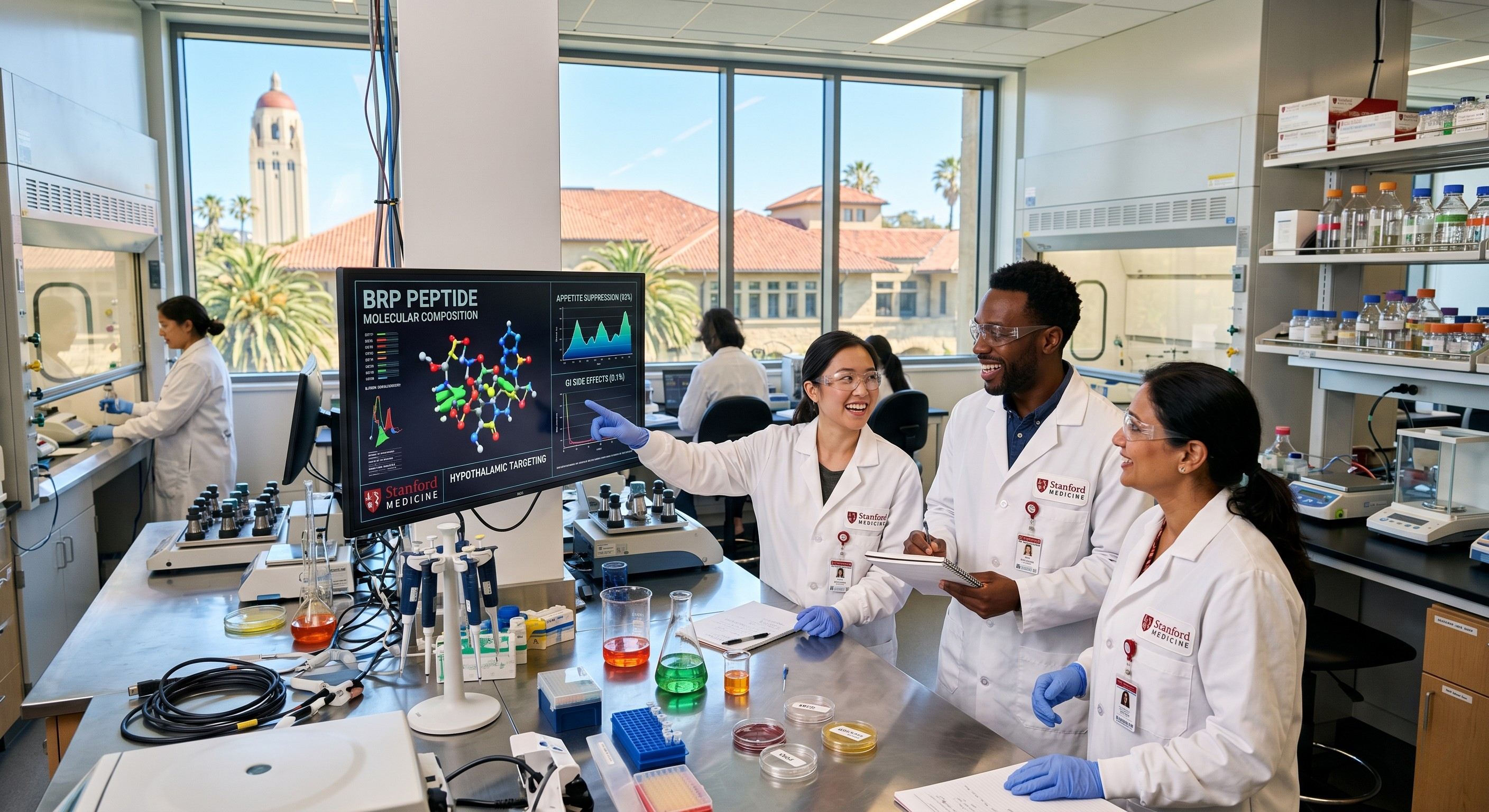
For the last few years, the world has been captivated by the "Ozempic revolution." Drugs like semaglutide have transformed how we treat obesity, but they’ve always come with a steep "tax": the constant threat of nausea, stomach issues, and the dreaded "food noise" being replaced by a general sense of malaise.
That might be about to change.
This week, scientists at Stanford Medicine announced a breakthrough discovery: a naturally occurring molecule that mimics the weight-loss power of GLP-1 drugs but operates through a completely different biological "back door."
The Discovery: Meet the “BRP” Peptide
While Ozempic and Wegovy work by mimicking a gut hormone, researchers used Artificial Intelligence to scan thousands of prohormones in the body. They landed on a tiny peptide currently being referred to as BRP.
Unlike current medications that flood your system and interact with receptors in your gut, pancreas, and brain simultaneously, BRP is a precision instrument. In early trials, it appears to travel straight to the hypothalamus—the brain’s master control center for hunger—to signal "fullness" without triggering the digestive system at all.
Why This Matters: No More “Bathroom Drama”
The primary reason people stop taking GLP-1 drugs isn't because they don't work; it's because they feel sick. Because Ozempic slows down the emptying of your stomach, it often causes:
- Chronic nausea
- Reflux and indigestion
- Significant muscle loss
The Stanford molecule (BRP) avoids this. Because it bypasses the digestive tract entirely and focuses on neural pathways, it doesn't slow down your stomach. In animal studies involving minipigs (which have metabolisms very similar to humans), the molecule reduced food intake by up to 50% within a single hour, with zero signs of the gastrointestinal distress or "lethargy" common with current injections.
The “Exercise Connection”
This discovery builds on earlier research into Lac-Phe, a molecule your body naturally produces during high-intensity exercise. Scientists have long known that a hard workout can "kill" your appetite for a few hours. By isolating the specific signals that the brain uses to regulate energy, the Stanford team has essentially bottled the "I’m not hungry" feeling you get after a run, without requiring the 5-mile sprint.
What’s Next for Us?
We are still in the early stages, but the implications for the general public are massive:
- Cleaner Weight Loss: Future treatments could focus on fat loss while preserving more muscle mass.
- Oral Options: Because this is a smaller, more stable molecule, there is a high chance it could eventually be taken as a simple pill rather than a weekly needle.
- Metabolic Health: Beyond just "eating less," BRP showed an ability to improve glucose tolerance and insulin sensitivity, making it a potential powerhouse for those with pre-diabetes.
The Bottom Line
We are moving from "blunt force" weight loss to "surgical precision." While we wait for human clinical trials to conclude, this discovery offers a light at the end of the tunnel for anyone who wants the benefits of metabolic health without the daily battle against side effects.
Sources
- Stanford Medicine News: "Stanford scientists discover 'natural Ozempic' without side effects," published April 12, 2026.
- ScienceDaily: "AI-identified peptide BRP mimics appetite suppression," released April 14, 2026.
- Journal of EMBO Molecular Medicine: "The anti-obesogenic metabolite Lac-Phe and its role in metabolic regulation," (April 2026 Update).
- Nature Metabolism: "Neural pathways of BRP-induced hypophagia in mammalian models."
.png?width=160&height=90&name=cdn%20(1).png "cdn (1)")