-1.png?width=1182&height=222&name=TSS_alternate_logo_v1b%20(long)-1.png "TSS_alternate_logo_v1b (long)-1")

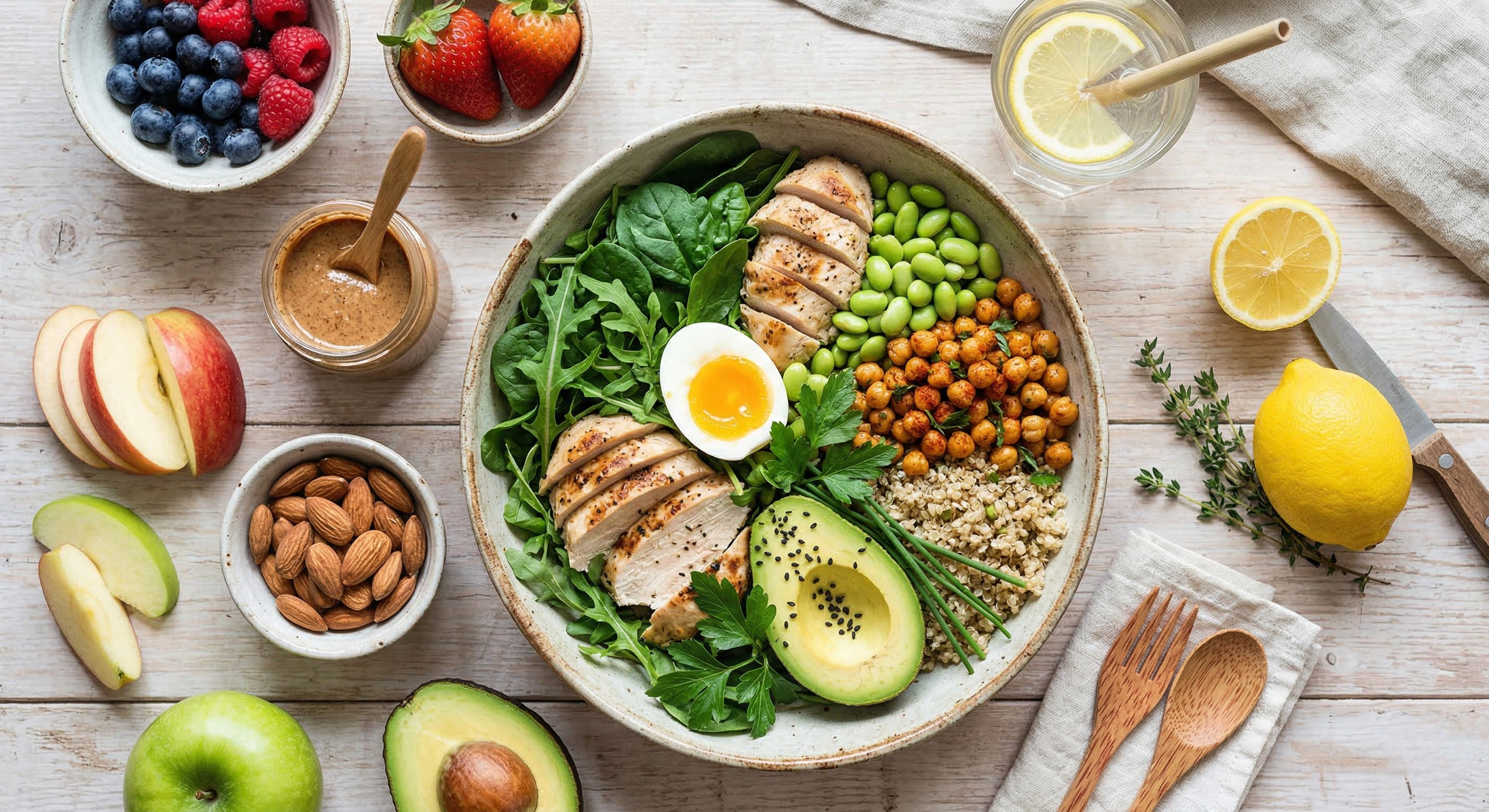
For decades, the health world was obsessed with what to remove—fat, carbs, calories, or sugar. But as we move further into 2026, the conversation has shifted toward what we should be adding.
The "Junkless Eating" movement isn't just a trend; it's a massive cultural backlash against Ultra-Processed Foods (UPFs). We’ve finally realized that a calorie from a lab-engineered snack bar doesn't function the same way as a calorie from an almond.
If you want to feel energized and resilient this spring, you need to understand the most important metabolic partnership in your body: The Protein-Fiber Connection.
1. The Backlash Against "The Lab"
Ultra-processed foods are defined by what they contain: stabilizers, emulsifiers, synthetic dyes, and gums. These ingredients are designed for shelf-life, not human life. Studies are increasingly showing that UPFs disrupt our gut microbiome and bypass our natural "fullness" signals, leading to overeating and chronic inflammation.
Junkless Eating is the antidote. It focuses on "whole-form" nutrients that your body recognizes and knows how to process. At the heart of this philosophy are two non-negotiable pillars: Protein for your muscles and Fiber for your metabolism.
2. The Muscle Crisis: Fighting Sarcopenia
As we look toward an active spring, we have to talk about Sarcopenia—the progressive loss of skeletal muscle mass and strength. While often associated with the elderly, research shows that muscle decline can begin as early as our 30s if we aren't intentional.
Muscle is your "metabolic Spanx." It keeps your metabolism high, protects your joints, and regulates glucose. To maintain it, you need high-quality protein. But here’s the problem: most people back-load their protein (eating a tiny bit at breakfast and a huge steak at dinner).
The Junkless Fix: Aim for 25–30 grams of protein at every meal. This provides a steady stream of amino acids to keep your muscle protein synthesis "turned on" all day long.
3. The "Fiber-First" Revolution
While protein builds the house, fiber maintains the foundation. The "Fiber-First" trend has taken off because of its incredible impact on blood sugar management.
When you eat fiber (especially soluble fiber) before or with other foods, it creates a gel-like substance in your digestive tract. This acts as a "metabolic speed bump," slowing down the absorption of sugars and preventing the insulin spikes that lead to fat storage and brain fog.
The Goal: Most adults get less than 15g of fiber a day. For true "junkless" health, aim for 30–35g daily.
4. Why They Are Better Together
When you pair protein and fiber, you create a Satiety Powerhouse. * Protein suppresses the "hunger hormone" ghrelin.
- Fiber physically stretches the stomach and triggers "fullness" hormones like GLP-1 (naturally!).
Together, they keep you full for hours, eliminate cravings for processed snacks, and ensure that the energy you get from your food is released slowly and steadily.
How to Build a "Junkless" Plate
You don't need a complicated app to track this. Just follow the 50-25-25 rule for your plate:
- 50% Fiber: Fill half your plate with colorful, fibrous vegetables (spinach, broccoli, peppers, or asparagus).
- 25% Protein: A palm-sized portion of clean protein (wild-caught fish, organic poultry, tofu, or eggs).
- 25% Complex Carbs/Fats: The remainder can be a healthy fat (avocado) or a slow-burning carb (quinoa or berries).
Top "Protein-Fiber" Power Pairings:
| The Snack | Protein Source | Fiber Source |
| The Power Bowl | Soft-boiled Eggs | Arugula & Sliced Radish |
| The Mediterranean | Hummus & Chicken | Raw Carrots & Snap Peas |
| The Plant-Based | Edamame | Sea Salt & Cracked Pepper |
| The Breakfast | Greek Yogurt | Chia Seeds & Raspberries |
Final Thoughts: Spring into Vitality
Spring is the perfect time to reset. By walking away from the "junk" and embracing the Protein-Fiber Connection, you aren't just dieting—you are biohacking your way to better aging. You’ll find you have more energy for those morning walks, better focus at work, and a body that feels strong from the inside out.
Stop counting calories and start making your nutrients count.
Junkless Myth vs. Truth
Myth: All food in a package is "ultra-processed." Truth: Not quite. Minimal processing (like canned beans, frozen berries, or plain Greek yogurt) is actually a "junkless" win. These preserve nutrients and save time without the lab-grown additives found in UPFs.
Myth: Fiber is only for digestion. Truth: Fiber is a hormone-signaler. It triggers GLP-1 (the fullness hormone) naturally, helping you stay satisfied without the need for synthetic interventions.
Myth: You only need high protein if you’re a "gym bro." Truth: Everyone needs high protein to prevent sarcopenia. In 2026, experts recommend 1.0 to 1.2 grams of protein per kilogram of body weight for all adults to maintain functional strength.
Myth: It doesn’t matter when you eat your protein. Truth: Timing is everything. Your body can only process so much protein for muscle repair at once. Spreading it across three meals is far more effective than one "protein-heavy" dinner.
.png?width=160&height=90&name=cdn%20(1).png "cdn (1)")