-1.png?width=1182&height=222&name=TSS_alternate_logo_v1b%20(long)-1.png "TSS_alternate_logo_v1b (long)-1")

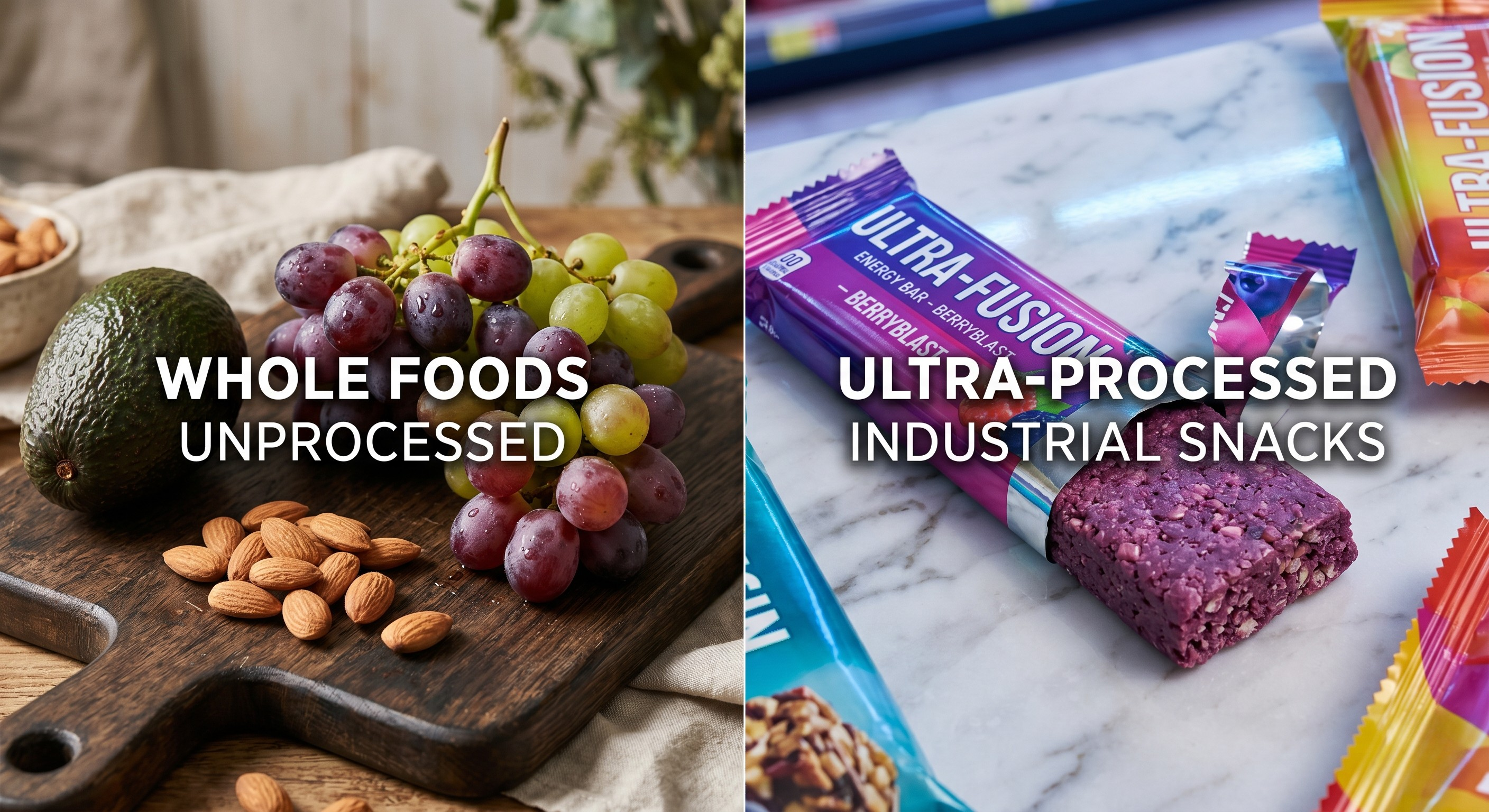
For decades, walking down the grocery store aisle felt like a mathematical homework assignment. We were told to count total calories, track our "macros" (the precise grams of carbohydrates, fats, and proteins), and opt for anything labeled "low-fat" or "sugar-free."
But a glaring paradox has emerged: despite millions of Americans diligently reading nutrition labels and logging their meals into fitness apps, rates of chronic metabolic diseases, Type 2 diabetes, and autoimmune conditions continue to climb.
A massive consensus is forming among the world's leading nutrition researchers and public health institutions, including the FDA and the World Health Organization. The scientific community is realizing that how a food is made matters just as much as—if not more than—the nutrients printed on the label.
The conversation has officially shifted away from calories and toward Ultra-Processed Foods (UPFs). Landmark data, including a sweeping global review published in The Lancet, warns that these hyper-engineered, industrial formulations pose a systemic threat to every major organ system in the human body.
The Invisible Threat: Cellular Chaos and "Hyper-Palatability"
To understand why ultra-processed foods are so damaging, we have to look past the stomach and dive directly into our cellular biology and neurological pathways. UPFs are not just "junk food"—they are industrially modified chemical matrices that disrupt three core pillars of human health:
1. The Fullness Hijack (Neurological Mismatch)
Human biology evolved over millennia to recognize the natural structure of whole foods. When you eat an apple or a piece of chicken, your digestive tract slowly breaks down the complex cellular walls, releasing nutrients gradually. This slow process triggers the release of satiety hormones like leptin, telling your brain, "I am full; stop eating."
UPFs are mechanically extruded, pre-digested, and chemically bound. Because their natural structural matrix has been totally pulverized, they melt in your mouth and absorb into your bloodstream almost instantly. This rapid absorption entirely bypasses your body's natural fullness signals. A famous, gold-standard clinical study by the National Institutes of Health (NIH) proved that when people were given unlimited access to a UPF diet, they instinctively overate by an extra 500 to 800 calories every single day compared to those eating whole foods, simply because their brains never registered that they were full.
2. Microscopic Gut Destruction (The Microbiome Crisis)
Your gut is home to trillions of beneficial bacteria that regulate your immune system, mood, and metabolism. These bacteria feed heavily on complex dietary fibers. UPFs are completely stripped of natural fiber to extend their shelf life.
Worse yet, they are packed with industrial emulsifiers and thickeners (like carboxymethylcellulose and polysorbate-80)—compounds added to keep packaged foods from separating on store shelves. Inside your gut, these emulsifiers act like dish soap, gradually washing away the delicate, protective mucous lining of your intestinal wall. This allows bacterial toxins to leak into your bloodstream, causing a condition known as "leaky gut" that triggers chronic, low-grade systemic inflammation throughout the body.
3. Cellular Toxicity and Chronic Disease
A sweeping, landmark review of data spanning over nine million people found undeniable links between high UPF consumption and 32 separate adverse health outcomes. The chemical additives, artificial sweeteners, and extreme heat processing create harmful compounds that damage our cellular mitochondria (the powerhouses of our cells), leading to:
- A 10% increase in cognitive decline and dementia risk for every incremental rise in daily UPF intake.
- Suboptimal cardiometabolic health, driving up visceral fat mass and arterial blood pressure.
- Accelerated cellular aging and metabolic syndrome, even in individuals who otherwise maintain a normal body weight.
Decoding the Blueprint: The NOVA Classification System
To help consumers make sense of this new reality, public health researchers rely heavily on the NOVA Classification System. Created by epidemiologists at the University of São Paulo, NOVA ignores calories entirely and categorizes everything we eat into four distinct groups based purely on the extent and purpose of industrial processing:
| NOVA Group | Classification | What It Actually Means | Everyday Examples |
| Group 1 | Unprocessed / Minimally Processed | Whole foods directly from nature, altered only by cleaning, freezing, or pasteurization to make them safe. No added ingredients. | Fresh fruits and vegetables, raw nuts, plain eggs, fresh cuts of beef or fish, plain whole milk, tap water. |
| Group 2 | Processed Culinary Ingredients | Substances extracted directly from Group 1 foods by pressing, milling, or refining. Used in kitchens to cook and season whole foods. | Extra virgin olive oil, real butter, honey, pure maple syrup, sea salt, granulated sugar. |
| Group 3 | Processed Foods | Simple industrial products made by combining Group 1 and Group 2 foods. They usually contain 2 to 5 recognizable ingredients and resemble traditional cooking. | Freshly baked bakery bread, canned vegetables in salted water, cheeses, canned tuna, cured meats like bacon. |
| Group 4 | Ultra-Processed Foods (UPFs) | Industrial formulations made mostly or entirely from substances derived from foods (like hydrogenated oils, modified starches, and protein isolates) plus chemical additives designed to maximize shelf life and hyper-palatability. | Soft drinks, packaged breakfast cereals, protein bars, frozen TV dinners, flavored yogurts, store-bought white bread, fast food. |
How to Spot the Hidden Culprits in the Aisle
Identifying UPFs isn't about avoiding every package in the store—it’s about becoming an ingredient detective. Many foods marketed heavily as "health foods" are secretly Group 4 ultra-processed products in disguise.
The easiest rule of thumb is to flip the package over and read the ingredient list. If you see a single ingredient that you couldn't find or use in a standard home kitchen, it is an ultra-processed food.
Look out for these common industrial tells:
- Industrial Fillers: High-fructose corn syrup, maltodextrin, invert sugar, soy protein isolate, hydrolyzed proteins, and chemically modified starches.
- Cosmetic Additives: Emulsifiers (lecithin, mono- and diglycerides), stabilizers, xantham gum, artificial colorings, and chemical flavor enhancers.
The Upgraded Grocery Cart: Single-Ingredient Swaps
Reversing the damage of a UPF-heavy diet does not require starvation or a complicated medical protocol. A recent 2026 clinical trial proved that simply shifting from a high-UPF diet to one composed of less than 15% processed foods rapidly lowered systemic inflammatory markers, optimized insulin response, and triggered natural, effortless weight loss.
You can make an immediate impact on your biological health by executing these simple, real-food grocery swaps:
- Instead of flavored, sugar-free fruit yogurt containing thickeners and artificial sweeteners $\rightarrow$ Swap in plain, full-fat Greek yogurt (Group 1) and stir in fresh berries and a drizzle of raw honey (Group 2).
- Instead of packaged instant oatmeal packets or mass-produced breakfast cereals. Swap in organic rolled oats or steel-cut oats, cooked with water or whole milk, topped with chopped walnuts.
- Instead of commercial "keto" or "wellness" protein bars packed with soy isolates and emulsifiers
Swap in a handful of raw almonds, a hard-boiled egg, or a piece of real fruit.
By walking away from the calorie-counting calculator and focusing purely on the quality of your food, you align your diet with your true evolutionary biology. Eat food that looks like it did when it came out of the earth, let your body's natural fullness signals do their job, and let real science take care of the rest.
Sources Used
- The Lancet Global Health Series: The Scourge of Ultra-Processed Foods: A Systematic Review of Harm to Human Organ Systems and Global Chronic Disease Trends (Published November 18, 2025; Updated Policy Review May 2026).
- Association of American Medical Colleges (AAMC): ‘The Health Challenge of Our Time’: Deciphering the Chemical Complexity of Ultra-Processed Foods (Published May 13, 2026).
- Alzheimer's & Dementia (Journal of the Alzheimer's Association): Industrial Food Manufacturing, Visual Attention Processing Speeds, and Long-Term Dementia Risk in Middle-Aged Adults (Published May 20, 2026).
- Institute for Health Policy and Leadership (IHPL): Policy Brief: The NOVA Classification System, Socioeconomic Food Swamps, and Clinical Trial Outcomes on Caloric Reduction (Updated April 2026).
- Food and Agriculture Organization (FAO) of the United Nations: Guidelines on Ultra-Processed Foods, Dietary Diversity, and Sustainable Nutrition Frameworks via NOVA (2025-2026 Reference Manual).
.png?width=160&height=90&name=cdn%20(1).png "cdn (1)")