-1.png?width=1182&height=222&name=TSS_alternate_logo_v1b%20(long)-1.png "TSS_alternate_logo_v1b (long)-1")

For decades, a diagnosis of advanced pancreatic cancer has been met with a heavy, collective dread in the medical community. It is a disease notoriously dubbed the "silent killer" because it hides deep within the abdomen, showing few symptoms until it has already spread to other organs.
For the more than half of patients diagnosed at the metastatic stage, the survival statistics have barely budged since the 1990s. Traditional chemotherapy often feels like trying to stop a freight train with a cardboard shield—it stalls the disease for a few brutal, side-effect-heavy months, but the cancer almost always finds a way around it.
But this spring, the oncology world was shaken by a rare event: genuine, unbridled hope.
Data from a massive Phase 3 clinical trial known as RASolute-302 sent shockwaves through the medical community ahead of the American Society of Clinical Oncology (ASCO) annual meeting. A new, targeted oral medication didn’t just nudge the needle forward; it doubled the median overall survival time for patients with advanced pancreatic cancer who had already failed standard treatments.
Here is a plain-English, thorough look at the disease this breakthrough targets, exactly how this smart pill works, and why scientists are calling this the beginning of the end for "undruggable" tumors.
The Ultimate Adversary: Metastatic Pancreatic Cancer
To understand why a doubling of survival is historic, you have to understand the specific monster this drug is fighting. The trial focused on metastatic pancreatic ductal adenocarcinoma (PDAC). This is the most common, aggressive, and deadly form of pancreatic cancer.
When PDAC reaches the metastatic stage, it means the primary tumor in the pancreas has shed cells that have traveled through the bloodstream to setup camp in the liver, lungs, or bones. At this stage, surgery to cut the tumor out is no longer an option.
Historically, if a patient’s cancer progressed after their first round of heavy intravenous chemotherapy, the options left on the table were heartbreakingly ineffective. Second-line chemotherapy typically gives patients a median survival of just over 6 months. It is a devastatingly short window of time.
Enter Daraxonrasib: Cracking the "Undruggable" Code
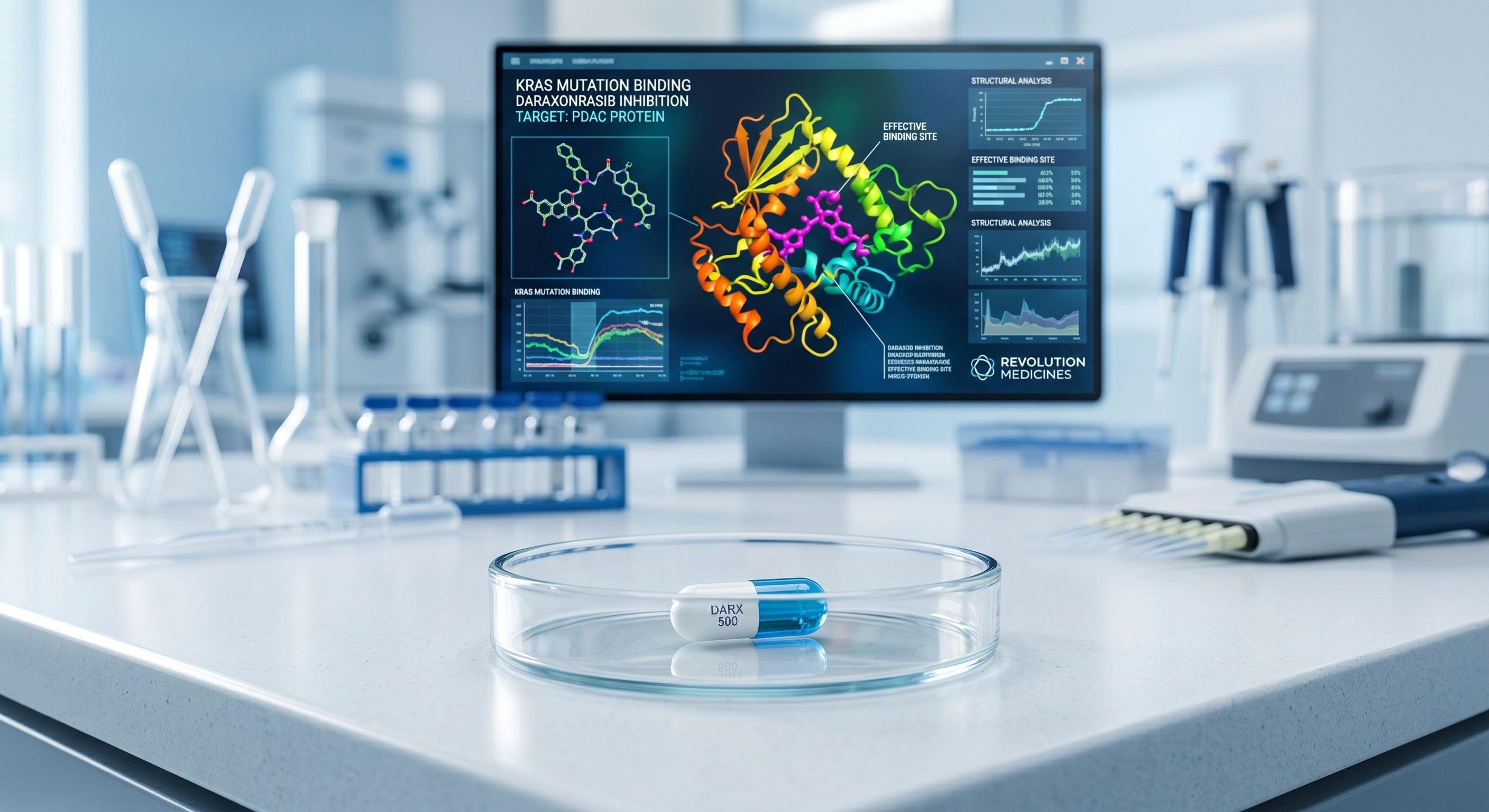
The hero of the RASolute-302 trial is an experimental daily pill called daraxonrasib (developed by Revolution Medicines). Daraxonrasib is not chemotherapy. It belongs to a cutting-edge class of drugs called RAS inhibitors.
For thirty years, scientists have known exactly what drives over 90% of pancreatic cancers to grow out of control: a mutated gene called RAS (specifically KRAS). Think of the RAS protein inside a cell like a light switch that controls growth. In a healthy cell, the switch turns on to heal tissue, then flips off. In pancreatic cancer, the RAS switch gets rusted in the "ON" position, constantly screaming at the cell to divide, grow, and conquer.
For decades, the RAS protein was considered completely "undruggable" because its physical structure is incredibly slick, lacking any deep pockets or grooves where a medicine could latch onto it. It was like trying to climb a sheer glass wall.
Daraxonrasib cracked the code. It is a "pan-RAS" inhibitor, meaning it is uniquely engineered to find the active, malfunctioning RAS switch, bind to it despite its slick surface, and forcibly flip the switch to "OFF."
What the Trial Revealed: The Numbers Behind the Hope
The RASolute-302 trial was a rigorous, global study that pitted this new pill directly against the best standard chemotherapies available for patients whose advanced pancreatic cancer had already returned after prior treatment.
The results were stunning:
- Survival Doubled: Patients taking the daraxonrasib pill lived a median of 13.2 months, compared to just 6.7 months for patients stuck on standard chemotherapy.
- A Pill vs. an IV: Instead of spending hours hooked up to a chemotherapy drip in an infusion clinic, patients simply took a pill at home.
- Manageable Side Effects: Because daraxonrasib is a targeted therapy, it zeroes in on cancer cells while sparing much of the healthy tissue that chemo destroys. The most common side effects reported were skin rashes, mouth sores, and mild digestive upset—a far cry from the severe immune-system crushing toxicity of traditional chemo.
Why This Changes the Future of Medicine
A jump from 6.7 months to 13.2 months might seem modest on paper to someone outside the medical world, but in the history of pancreatic oncology, it is a monumental leap. It proves that the "impenetrable fortress" of pancreatic cancer has a fatal flaw.
Because over 90% of pancreatic cancer patients carry this RAS mutation, this single drug isn't just a niche cure for a lucky few—it has the potential to help almost the entire pancreatic cancer population.
Furthermore, because the drug was so successful in patients with late-stage, previously treated cancer, doctors are already launching new trials to move daraxonrasib to the front lines. A brand-new clinical trial is currently enrolling patients to see what happens if they give this pill to patients immediately upon diagnosis, or combine it with chemotherapy right out of the gate. The hope is that by attacking the RAS mutation earlier, survival times could stretch even further.
For millions of families who have watched loved ones fight this brutal disease, science has finally delivered a weapon that shifts the odds. Pancreatic cancer may still be a formidable opponent, but as of this week, it is officially on notice.
Sources Used
- Pancreatic Cancer Action Network (PanCAN): Official Press Statement on Revolution Medicines' Phase III RASolute-302 Clinical Trial Results (Released April 14, 2026).
- American Society of Clinical Oncology (ASCO): Plenary Session Advance Abstracts & Program Guide, 2026 Annual Meeting: Targeted Therapies in Pancreatic Ductal Adenocarcinoma (May 2026).
- Revolution Medicines, Inc.: Investor Relations and Clinical Pipeline Update: Landmark Efficacy Data for Daraxonrasib (Monotherapy) in Previously Treated Metastatic PDAC (Updated May 18-21, 2026).
- BioSpace Medical Journalism: Can Revolution’s ‘Miracle’ Pancreatic Cancer Drug Be Topped? Clinical Insights into Phase 3 RASolute-302 Outcomes (Published May 18, 2026).
- Works in Progress Journal: The Slippery Protein Problem: How Targeted Oncology Finally Cracked the Pancreatic Cancer KRAS Mutation (Published May 12, 2026).
.png?width=160&height=90&name=cdn%20(1).png "cdn (1)")