-1.png?width=1182&height=222&name=TSS_alternate_logo_v1b%20(long)-1.png "TSS_alternate_logo_v1b (long)-1")

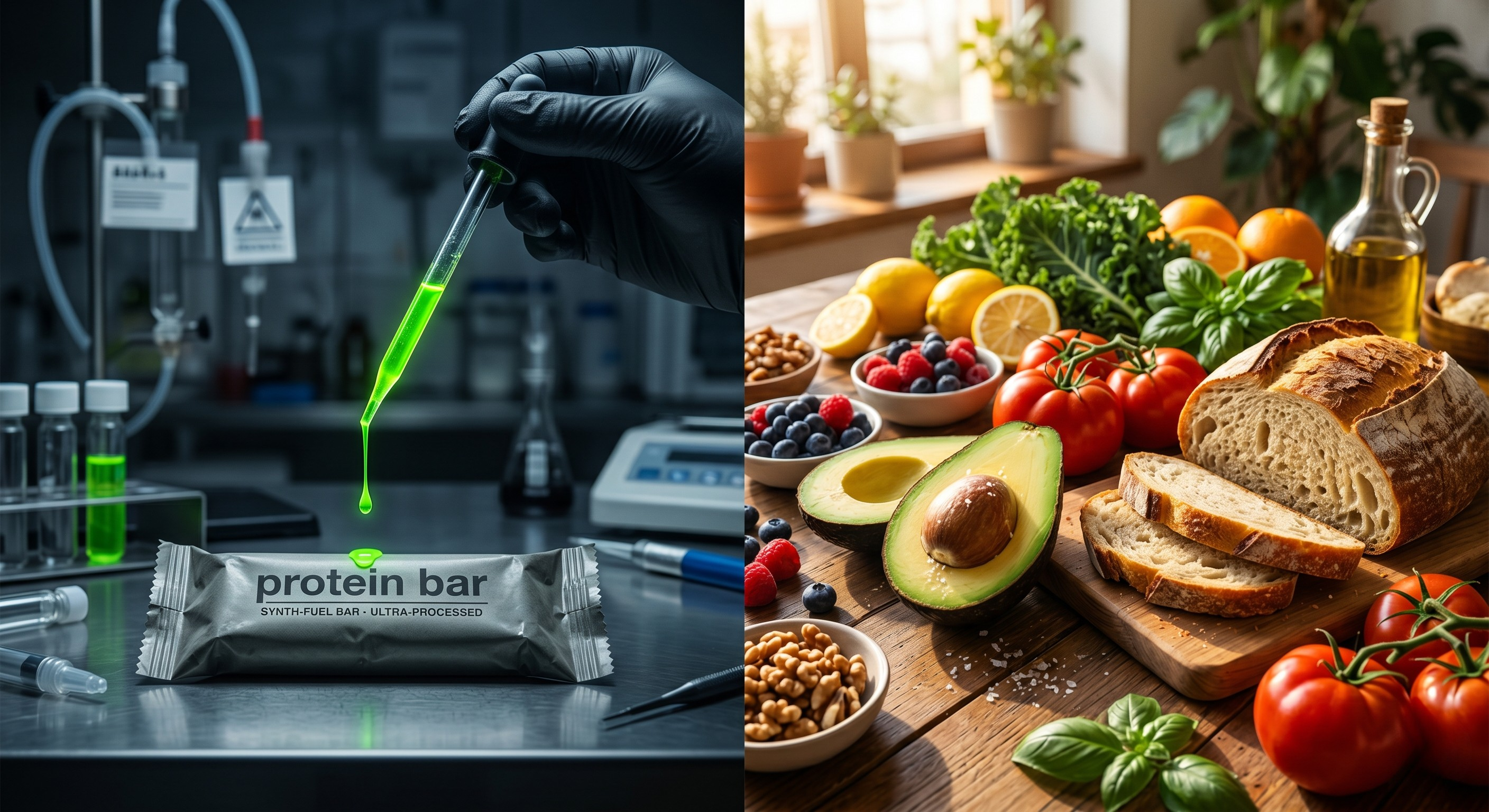
For the better part of forty years, we were told a simple lie: A calorie is a calorie. If you ate 2,000 calories of broccoli or 2,000 calories of neon-colored cereal, the math was supposed to be the same.
But as we hit the midpoint of 2026, the data has finally caught up with the "common sense" of our ancestors. The Ultra-Processed Food (UPF) Reckoning is officially here, and it’s changing how we eat, how we shop, and how we measure our health.
The "Industrialized" Gut
The recent spike in interest isn't just a trend; it's a reaction to groundbreaking microbiome research. We now know that UPFs—foods containing emulsifiers, thickeners, and "natural" flavors—act like a wrecking ball to the gut lining.
These additives aren't just "extra" ingredients; they are microbiome disruptors. They thin the protective mucus layer of the gut, leading to low-grade chronic inflammation. This is why you can be "thin" but still metabolically "unhealthy."
The Death of the Calorie, The Rise of Insulin
In 2026, the savvy health consumer isn't stepping on the scale every morning—they are checking their Fasting Insulin.
While "calories in, calories out" (CICO) focused on energy, the UPF-free movement focuses on hormonal response.
- The UPF Effect: Highly processed carbohydrates and industrial seed oils cause massive insulin spikes that stay elevated, "locking" the body into fat-storage mode.
- The Whole Food Effect: Intact fibers and complex proteins regulate blood sugar, keeping insulin low and allowing the body to access stored energy.
As a result, searches for "metabolic markers" have surpassed "weight loss tips" for the first time in history. People no longer want to be "light"; they want to be metabolically flexible.
What Exactly Counts as a UPF?
The "Reckoning" has forced us to look at the NOVA scale, which categorizes food by processing level rather than nutrients:
- Unprocessed/Minimally Processed: Fruit, eggs, steak, oats.
- Processed Culinary Ingredients: Olive oil, butter, honey.
- Processed Foods: Freshly baked bread, canned beans, simple cheese.
- Ultra-Processed Foods (The "Red Zone"): Energy bars, sodas, reconstituted meats, and most "healthy" vegan meat substitutes.
The "UPF-Free" Lifestyle Shift
The market is shifting. We are seeing a massive "Whole Food Comeback." In 2026, the status symbol isn't a branded meal replacement shake; it's a sourdough loaf made with three ingredients or a bowl of pasture-raised eggs.
People are moving toward a "Crowding Out" strategy—filling the plate with so many nutrient-dense, whole foods that there simply isn't room (or a craving) for the industrialized "food-like substances" that dominated the early 2000s.
The Bottom Line
The UPF Reckoning is about taking back control from the industrial food complex. It’s a shift from quantity to quality, and from deprivation to nourishment. Your gut microbiome is a garden—and in 2026, we’ve finally stopped watering it with chemicals.
Sources Used:
- The BMJ (Feb 2026): Ultra-processed food exposure and adverse health outcomes: multi-center systematic review.
- Cell Metabolism (2025/2026): The impact of food emulsifiers on the human gut microbiota: A randomized controlled trial.
- ZOE Health Study 2026 Report: Microbiome diversity and its correlation with long-term metabolic markers.
- Nature Communications: Fasting insulin as a primary predictor of cardiovascular health in UPF-heavy diets.
- World Health Organization (WHO) Guidelines: Updated recommendations on the consumption of industrialized food-derived additives.
.png?width=160&height=90&name=cdn%20(1).png "cdn (1)")