

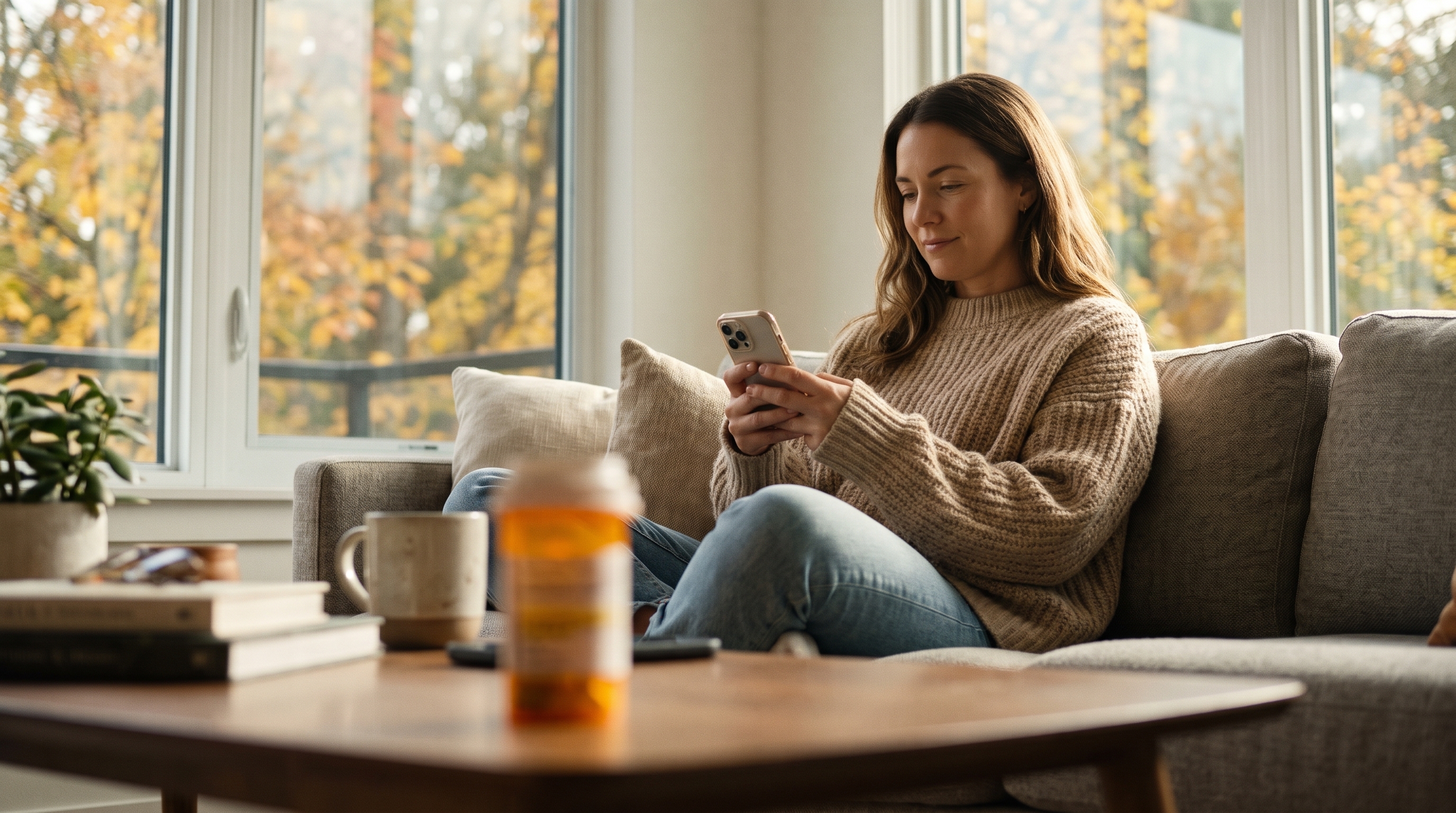
As the leaves change and the days get shorter, it’s not just the weather that shifts. For many of us, the transition into Fall brings an unwelcome guest: a noticeable spike in stress and seasonal anxiety.
If you’ve ever found yourself lying awake at night with a racing mind, you are far from alone. But when it comes to treating that anxiety, a lot of people feel stuck. You might be desperate for relief but hesitant to jump straight into prescription medications.
What if there was an alternative that was just as effective as a daily pill?
Thanks to a groundbreaking 2023 study, we now have clinical proof that a holistic approach can stand toe-to-toe with first-line pharmaceuticals. Let’s dive into the science of how mindfulness is changing the landscape of mental health.
The Groundbreaking Study: Mindfulness vs. Escitalopram
For years, meditation has been praised as a great way to relax, but skeptics often brushed it off as a temporary fix rather than a serious medical treatment. A rigorous clinical trial published in JAMA Psychiatry (Hoge et al., 2023) just flipped that script entirely.
What the Clinical Data Actually Says
Researchers took 276 adults suffering from anxiety disorders and split them into two groups. One group took escitalopram, a highly common, first-line anxiety medication (often known by the brand name Lexapro). The other group was enrolled in an 8-week mindfulness-based stress reduction program.
The results were incredible. At the end of the trial, the mindfulness program worked just as well as the medication. Both groups saw a nearly identical, significant drop in their anxiety levels.
Why This is a Massive Game-Changer
This data is incredibly empowering. It validates what mindfulness practitioners have been saying for centuries, bringing it out of the wellness fringe and solidly into evidence-based medicine.
Mindfulness isn't just a "woo-woo" concept or a nice way to spend a Sunday morning. It is a highly effective, clinically backed tool that physically rewires your brain to manage stress without the side effects that often accompany pharmaceuticals.
How to Build Your Fall Mindfulness Habit
You don't need to quit your job and move to a silent retreat to get these benefits. The participants in the study learned practical, daily habits. Here is how you can build yours this Fall.
Start Small: The 10-Minute Rule
The biggest mistake people make is trying to meditate for an hour on day one. Instead, lean into a simple daily habit:
- Pick a time: Morning coffee, your lunch break, or right before bed.
- Set a timer: Commit to just 10 minutes a day.
- Use a guide: Download a guided meditation app like Calm, Headspace, or Insight Timer to walk you through the process.
Find Your Community
The study utilized a structured program, which means the participants had guidance and accountability. If meditating alone in your room feels isolating, look for a local mindfulness class or a group stress-reduction program in your area. Practicing with others can make the habit stick much faster.
Finding the Right Path for You
It is important to note that this research isn't about shaming medication. For many people, prescription medications are an absolute lifesaver and a necessary tool for navigating daily life.
The true victory of this study is about options. If medication works for you, that is fantastic. But if you have been hesitant to try pharmaceuticals, or if you are looking for a supplementary tool to add to your mental health toolkit, you now know that mindfulness carries serious clinical weight. Always talk to your doctor about the best path forward for your specific situation.
Whether you choose meditation, medication, or a balanced mix of both, there is scientifically proven hope for your anxiety.
Will you commit to trying just 10 minutes of guided meditation today? Drop a comment below and let us know what your favorite meditation app or technique is!
