-1.png?width=1182&height=222&name=TSS_alternate_logo_v1b%20(long)-1.png "TSS_alternate_logo_v1b (long)-1")

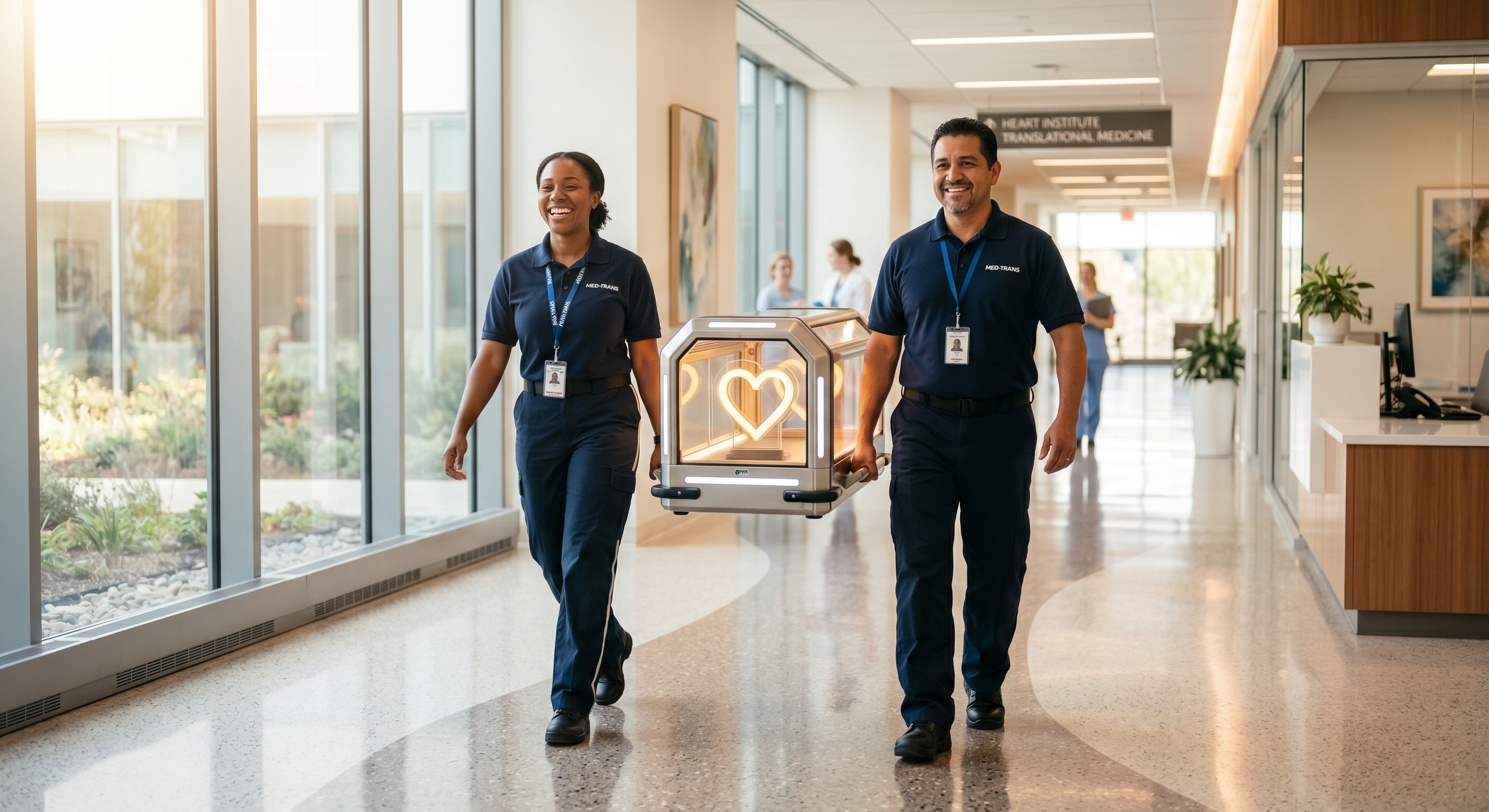
For decades, the imagery surrounding organ transplants has looked exactly like a Hollywood movie: a medical team rushing through hospital corridors carrying a standard, sterile cooler packed with ice. While cold storage has saved countless lives, it has always had a major flaw—it puts the organ to sleep, starting a strict, unforgiving countdown clock before the tissue begins to degrade.
On June 22, 2026, a medical team at Penn State Health Milton S. Hershey Medical Center shattered that old paradigm.
The hospital successfully executed its very first heart transplant using a revolutionary "warm perfusion" technology, affectionately known in the medical community as the "Heart-in-a-Box." This historic milestone didn't just save a life; it opened up a bright new frontier for how we preserve and transport human organs.
What is the "Heart-in-a-Box" Technology?
Instead of freezing the donor heart in an icy stasis, this specialized system keeps the heart alive, warm, and actively pumping outside the human body.
By continuously circulating warm, oxygenated, and nutrient-rich blood through the heart chambers, the machine mimics the natural environment of the human chest. The heart continues to beat during its entire journey from the donor to the recipient.
This specific milestone was achieved during a Donation after Circulatory Death (DCD) case. Historically, DCD hearts were rarely used for transplants because the lack of oxygen immediately following circulatory arrest made them too fragile for traditional ice-cooler transport. This new tech changes the math entirely.
Why This Medical Breakthrough Changes Everything
The implications of this successful surgery are incredibly uplifting for patients currently waiting on transplant lists. The "Heart-in-a-Box" system solves two of the biggest hurdles in transplant medicine:
- Expanding the Travel Radius: Traditional cold storage gives surgical teams a very tight window to transport a heart. This milestone demonstrated that teams can now safely transport and preserve viable donor hearts across distances requiring more than three hours of travel time.
- Rescuing More Organs: By keeping the heart beating and allowing doctors to assess its performance during transport, the available donor pool materially expands. Hearts that previously could not be utilized are now viable, life-saving options.
"This technology allows us to go further distances to retrieve hearts, meaning our patients have a much higher chance of finding a matching organ sooner," noted the surgical team at Milton S. Hershey Medical Center.
A Future Full of Hope
Imagine a world where the geographic distance between a donor and a recipient no longer dictates whether a life can be saved. That is the future this technology is building.
By taking the time constraint out of the equation and breathing life into hearts on the move, medical science is proving that our ability to heal is boundless. This milestone at Penn State Health is a beautiful reminder of the incredible strides being made in biomedical engineering—giving thousands of families a second chance at life and a reason to look toward the future with immense excitement.
Sources:
- Penn State Health Newsroom: Press release dated June 22, 2026, detailing the first successful DCD heart transplant utilizing warm perfusion technology at the Milton S. Hershey Medical Center.
- The Journal of Heart and Lung Transplantation: Clinical guidelines and data overviews regarding the efficacy of warm blood perfusion systems versus traditional cold static storage for donor organs.
- TransMedics Clinical Registry: Technological parameters and travel-time extension data for the Organ Care System (OCS) Heart platform, detailing successful preservation metrics exceeding three hours.
.png?width=160&height=90&name=cdn%20(1).png "cdn (1)")